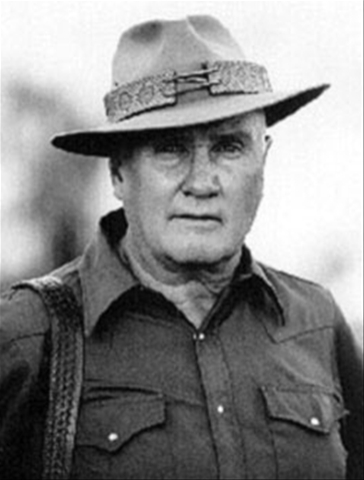
Shootrite Firearms Academy's Defensive Handgun course started at 8:30AM in the classroom. Tiger McKee, the director and founder of Shootrite, started out by introducing himself and his co-instructors to the seven course attendees. Attending were myself, three other men and three women. I was the youngest attendee, something that kind of surprised me. I thought the fact that almost half of the course attendees were women was interesting. Most of the attendees (at a guess) were 50+.
Tiger started out by explaining that the overarching theme of this course was consistency. Fast is his least favorite word. This was a basic handgun self defense course and he wanted everyone focused on doing everything correctly every time in order to get as many good repetitions in as possible.
Next he went into a discussion of safety. Tiger gave an in depth discussion of the Four Rules of Firearm Safety, not just simply stating the rules but explaining why each one is important in detail. He made the point of saying, "Good guys are responsible for everything they do, and must be responsible for where every bullet goes."
One thing that I think was very important that was brought up was that you have to not only be conscious of being safe yourself, but also of the habits of others around you. You can be doing everything right and someone can walk right in front of you. This could be your spouse in a self defense situation or someone shooting on the range next to you. Being aware of the other people around you and what they are doing is very important.
We were told that if we saw something unsafe happening that we should point it out and try to correct it.
After the safety discussion, we moved on to a discussion of The Fight. "Call it what you want," Tiger told us, "but self defense is a fight." Fights, he went on to say, are 90% mental. A fight is problem solving at high speed.
Tiger asked us when a fight starts. For Tiger, a fight starts when he wakes up that day and acknowledges that, "Today may be the day I have to defend myself or my family from a violent attack." The idea is to be ahead of the game so that if something happens you're not in complete denial about what is happening.
The next topic was, when does the fight end? We were taught that the fight ends when legal authorities arrive and secure the scene and there is no chance of anything else happening. Something that I had not considered was that it could be minutes, hours, or days before things are secured. A natural disaster or civil unrest can mean that it can take a long time before authorities can get to you.
Tiger is a big believer in avoidance and escape. If you can avoid a fight or escape from a situation that should always be the choice you take. Fights are like car accidents. They can come out of nowhere. But if you pay attention to what is going on around you most times you can avoid a bad situation before it turns into an accident or a fight.
Next we discussed what happens to us in a fight. We were told to be aware of stress effects such as tunnel vision, auditory exclusion, and loss of dexterity. Tiger recommended with research this thoroughly on our own time.
Tiger explained that most confrontations happen at conversation distance. About 50% of violent encounters involve two or more attackers. Around 70% of violent encounters happen in low light. Another key point was that self defense confrontations happen fast, usually 3-5 seconds. In a violent encounter people are usually familiar with each other in 80% of conflicts (the numbers are slightly higher for women, and slightly lower for men).
In a fight, the only thing you can control is yourself and it is better to act than to react. You should be attempting to make your attacker react to your actions rather than react to theirs. This is why doing something immediately is usually better than waiting. An imperfect immediate response is better than a late perfect response.
Next we discussed the elements of marksmanship. We shoot to stop the threat. Shooting them in the best manner to stop them may mean that they die as a result, but killing them is not the goal. Stopping our attacker is the goal.
Accuracy in a defensive encounter is defined by distance to and size of the target. You need to be sure you are doing what you need to do in order for your bullets to go where you want them too. This is why consistency is so important. You need to know exactly where your bullet is going every time you press the trigger and doing things consistently is how that happens.
We discussed the steps of taking the shot: Aim, hold, press, follow though. Follow through is probably one of the most important steps because you may need to take multiple shots and follow through sets you up to be able to do so correctly.
Tiger explained that we shouldn't get too caught up in "shooting the bullet." That's the guns job. Our job is to point the gun in the right direction and smoothly press the trigger He also pointed out that speed is going to be dictated by the accuracy necessary to make good hits. The closer you are to the target the faster you will be able to shoot.
We were taught three zones on the the body we should be aiming for in a defensive encounter. Our primary target is center mass of the chest. This is the largest part of the body available where we can put rounds that will stop an attack. However, people can and do sustain damage here and keep coming. Body armor can also be a concern. Therefore, the secondary zone on the body Tiger advocates shooting is the pelvic area. A lot of blood flows through this part of the body and it is a key structure needed to keep a person on their feet. A good hit to the pelvis can put a person on the ground so that they can not stand back up.
The third zone is the central nervous system, or head shot. Because the human skull has evolved to protect the brain this is a very difficult part of the body to attack. Shots typically need to go into the head via the ocular canal between the eyebrows and the base of the nose. This is why it is typically the last of the three zones to shoot at.
When shooting to stop a threat it is important to put good, accurate hits on the threat until we get the results we want. Consistently operating the handgun is going to be extremely helpful with this.
It's also important to remember that you are shooting at a 3D target and may need to adjust your angle of fire to get those shots where you need them.
After marksmanship we discussed firearm manipulations. There are two types of manipulations, administrative actions and functional actions. Administrative actions are those that can be done at your discretion such as loading, unloading, and chamber or press checks. Functional actions are those that must be performed immediately such as empty reloads and malfunction clearances.
Any gun can and will malfunction under the right circumstances so it is important to know how to handle them and to train to handle them in action. This was covered extensively in Day 2 of the course.
The final topic covered in the classroom was tactics. Situational and environmental awareness are the key aspects to defending oneself. Being aware of where you are and what is going on around you gives you the chance to see something that you don't like and act instead of being on the opposite end and just reacting to something that is happening to you.
You're first goal should be to avoid and/or escape the situation. This is the best response if it is available to you. If not you should be trying to move (distance is your friend in a self defense scenario), communicate (force the adversary to rethink what they are doing with verbal commands), use cover, and if necessary shoot. Any of the steps up to shooting may resolve the situation. If they don't, you'll need to put accurate hits on the threat until they stop.
After our discussion of tactics we took a short morning break and then headed to the range.
The number of participants in each course at Shootrite is limited to 8. This means each individual can get plenty of one on one coaching from the instructors. It also means that a huge range isn't necessary. The range could have probably accommodated twice as many shooters, but with just 7 of us there was plenty of room for everyone to be on the firing line at the same time without crowding each other.
Tiger breaks up the range time with frequent short breaks. This allows the instructors to give short lectures on what we will be doing and allows participants to load mags, re-hydrate, or grab a quick snack between time on the firing line.
We started our time on the range with a lot of dry practice. Since the overall theme of the course is consistency we were told to focus on proper technique. We were encouraged to go as slow as necessary to do everything correctly every time. At no time during the two days were we rushed to finish performing a drill.
First we discussed shooting stances. Tiger is a believer in using what works best for you so he does not advocate once particular shooting stance over another, but rather acknowledges that you may have to shift from one to another as a fight progresses. What he did ask we do is to maintain a good fighting stance with our foot placement and weight forward over our feet.
Next we worked on the draw stroke and holstering. Shootrite teaches the draw in a familiar four step process of: 1. Strong hand grips holstered pistol in preparation to draw while support hand slaps the center chest. 2. Bring pistol up into the retention position, tucked into the body but canted out so that the slide can operate without getting caught in clothing or hitting the body if extremely close quarters shooting is necessary. Support hand remains against the chest. 3. Attain a two handed grip and begin to press out. 4. Press out to low ready if a threat is present or if you have decided you must shoot press out towards the threat until your sights come to your eyes at which point your finger should be on the trigger and taking up slack until the shot breaks.
One thing that I should mention is that Tiger also took the time to demonstrate drawing from concealment. He offers a version of Defensive Handgun where everything is done from concealment, but in this particular course we had the option of using a cover garment or not. For Day 1 I did not use a cover garment but used my Glock 17 in a Galco Royal Guard IWB holster. For Day 2 I concealed my Glock 17 under a polo shirt and used a kydex DSG Alpha OWB that I typically use in IDPA matches.
Along with the draw we also practiced working our pistols back into the holster in a slow, and safe manner. There is no rush to get the gun back in the holster. Tiger teaches that when a threat is gone one should return to low ready (or remain in low ready if taking aim at the threat and firing was not necessary) and scan the area for any other threats. From low ready we were coached to slowly work the draw stroke in reverse while constantly doing a slow scan of our surrounds until we had our gun back in the holster. It was emphasized over and over that there is never any reason to rush this process as a new threat can pop up at any time or the original threat may return.
We next worked on loading and unloading. Loading began from low ready. Keeping the gun in low ready and our eyes up we retrieved a magazine with our support hand and with it properly indexed (base in the palm, index finger touching the first round in the mag) we fit the flat back of the magazine to the flat back of the magazine well on the pistol. The magazine was then firmly seated and the support hand came up to aggressively run the slide to load a round. This is all done with the eyes up. The only time the eyes go to the gun is to perform a visual check that a round is loaded.
Unloading was a more involved process than I have used before. The magazine is removed and retained in the pinky of the strong hand. The support hand aggressively runs the slide at least three times in order to clear any loaded round, and then a visual check is performed. The only time the eyes should come down to the pistol is when doing the visual chamber check.
Confirming clear was done by using the fingers to confirm no magazine is inserted, running the slide three times to remove any round in the chamber, and then doing a final visual check to confirm the chamber is empty. At this point to pistol was worked back to the holster while scanning our surroundings.
As you can probably see the idea is to be able to do all of these manipulations blind so that you can keep your head up and eyes on the move looking for any potential threats. Doing it the same way every time maintains consistency. If you do it that way every time, you'll keep your eyes up and on the threat/s if you are performing an empty/speed reload while in a fight.
At this point we broke for lunch at a very nice local diner called the South Sauty Creek Cafe. They make a great bacon cheeseburger. I highly recommend it if you are taking a course or just in the Langston, AL area.
After lunch we went back to the range for some live fire practice. Before we got into the actual live fire we did an exercise to familiarize everyone with the reset of their trigger. This was done buy breaking up into pairs, dry firing the pistol and holding the trigger all the way to the rear, and having the other person run the slide for you. At that point you would let out the trigger until it resets in preparation for another shot. We did this a few times until everyone got a good feel for their pistol's reset.
We moved on to shooting from the low ready. On the command we would come up from low ready, issue verbal commands to the threat, and then assuming that failed fire the required number of rounds, being sure to take our time and work on reset. We started with a singe shot, and then resetting the trigger. We moved up to multiple shots.
Live fire continued with us working under the assumption our threats were not going down and transitioning to the pelvic region or a head shot as we were instructed. We also did some drills shooting all three zones in various order.
As the day came to a close we were working from the holster, completing a draw, engaging our target, and then scanning our surroundings while working our pistols back to the holster. Everything was done deliberately and slowly with the goal of performing every action consistently every time.
Something new to me was the exercise in which we performed our draw stroke as if we needed to shoot the threat, but with our eyes closed to see what our body felt like when the pistol was pointed correctly. We did this a few times, opening our eyes after the press out to check our sights and make adjustments if necessary. We eventually moved to live fire blind. It was impressive to me how easy it was to get good, accurate hits at close distances. The goal here was to show us that you don't need much in the way of sight alignment, just a flash of the front sight, to confirm you are going to make a good hit when you press the trigger. This was the only time we actually did anything at speed because at such close distance speed really becomes important, but you have to know you can make good hits.
We closed out the day getting the basics of moving left and right (dry) before wrapping things up with a final discussion of what we had covered and why it was important. Every repitition needs to be done correctly every time so that it becomes second nature. In this way you are training your subconscious to do what you want it to do under stress. You communicate with the threat. Many times just making them aware that you are not a passive victim will cause them to back off. If verbal commands don't work you gain compliance by getting good, accurate hits with your handgun. Finally, using movement you get the threat to respond to your actions rather than the other way around.
And that was Day 1. It was largely stuff that I was already familiar with from literature and other training course I've attended but there was definitely some new material and even repeating things I had done before made for a great refresher.
Stay tuned for Day 2.